
Avaliação do Corgibet Casino para Principiantes
Se está a dar os iniciais passos no meio dos casinos online, possivelmente já se deparou com o nome Corgibet Casino e quer saber se esta
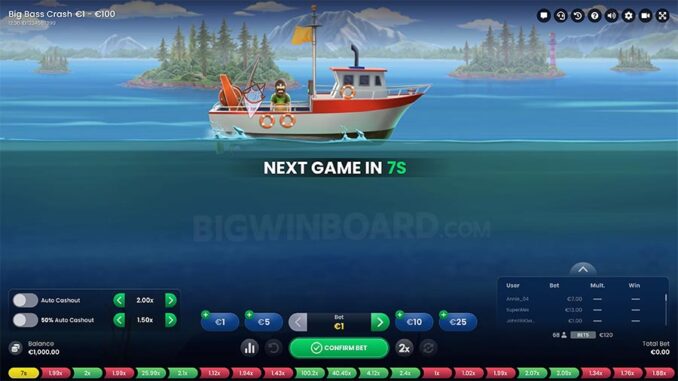
The battle for attention in online gaming is intense https://bigbasscrash.eu/. Developers typically use eye-catching graphics or nonstop promotion. However a different approach is emerging. Real lasting success doesn’t rely on tricks. It originates from a straightforward notion: value the gamer. People call this a “player-centric” strategy. It means clear rules, equitable play, and letting the community guide a game’s growth, instead of pursuing fast profits. The UK market, famous for its knowledgeable gamers and tight oversight, demonstrates this clearly. Look at the Big Bass Crash title. Its growth wasn’t luck. It’s an obvious lesson. When a game’s design aligns with what players truly value, it creates a dedicated following. This alignment is transforming what players want. It shows that in the modern digital world, the most intelligent approach is to make the player the priority.
Big Bass Crash draws strength from a straightforward concept. This straightforwardness, strangely, creates serious engagement. Players don’t have to commit to memory complex rules, symbol charts, or lengthy prize tables. All hinges on a sole, critical decision: hitting the “Cash Out” button prior to the multiplier collapsing. This focused concentration empowers the gamer. They alone are accountable for their choice, based on their own appetite for risk. It generates a real tension, a direct link between move and consequence. This sense of agency is essential to the User-Focused concept. By paring down the session to only one clear, gamer-directed gamble, the offering values the gamer’s autonomy and discernment. A success feels like a personal triumph. A loss seems like a known risk, not a puzzling glitch in the game.
Big Bass Crash converts its player-first promises into reality through particular design choices. The main game mechanic is a multiplier that climbs a curve until a random “crash” happens. Visually, it’s uncomplicated. Players comprehend the risk and reward instantly. There are no hidden mini-games or confusing bonus features to complicate the waters. This clarity is everything. The game also skips elaborate stories or complex leveling systems that might coerce players into longer rounds. Every round is a fresh beginning. The player decides when to play and for how long. A clean, intuitive interface gets out of the way. The focus remains on that one strategic choice: when to cash early. This design respects the player’s intelligence. It presents a tool for enjoyment, not a maze designed to capture and maintain attention.
Comparing the Player First model against older game designs demonstrates why it’s gaining traction. Many traditional games, especially in the online casino industry, use strategies intended to keep players fixated on the screen and spending non-stop, at times without their full awareness.
The experience of Big Bass Crash goes beyond a single player’s screen. It establishes a Player First world by generating shared moments, which are crucial for a game’s lifespan. The format is social by nature. Multiple players navigate the same climbing multiplier curve, sharing the collective buzz as the numbers rise. This organically sparks conversation. People exchange tactics and cheer or groan over a crash together. Online platforms and live streams enhance this effect, turning a solo game into a group spectacle. Developers and the sites featuring the game often promote this. They spotlight major wins and make space for players to interact. This community work alters the game. It moves beyond being just software and evolves into a social spot. The value isn’t only in a potential payout, but in being part of a group’s exciting moment.
A true Player First philosophy must consistently support responsible play. Here, the entire structure of Big Bass Crash provides integrated safeguards. The game is built on compact, separate rounds. This creates organic stopping points, unlike the unending, automated loops of some slots. Reliable UK platforms enhance this by including required tools like deposit limits, session timers, and easy links to support services such as GamStop and GamCare. The game’s straightforward design also assists with self-awareness. Because the main action is a single, deliberate cash-out decision, players might become more conscious of their expenditure compared to the rapid, automatic play of different genres. This design illustrates that safe play can be part of the game’s core, not just a sidelight in the terms.
The positive response for Big Bass Crash’s approach in regions such as the UK hints at a bigger, lasting shift for the industry. As gamers become more informed and governing bodies tighten rules, the economic argument for unethical or exploitative design fades. The path forward leads to games built for sustainable engagement, where confidence and fun are the key methods for engaging players. We can expect to see more development in clear mechanics, enhanced social and community tools, and even more seamless integration of responsible gaming tools within the game itself. Games that follow the Player First framework, prioritizing long-term community over short-term gain, are ready to define this coming era. They show a core principle. The most effective way to build a successful game is to truly respect the thinking, liberty, and well-being of the user playing the game.
“Players First” is more than a catchphrase. It’s a framework that defines a game from the ground up. It affects how the product functions, how the creators interact with players, and how it improves over time. The old paradigm saw players as consumers. The new paradigm views them as collaborators. This relationship requires transparent systems, not tricks that prey on human nature. It requires explicit, upfront details on any currency wagered. And it entails paying attention when users give input. In regions like the UK, with strong consumer safeguards, this mindset fits well with both the rules and the regional environment. For a game like Big Bass Crash, it’s about building trust through reliable mechanics. The fun should arise from the product itself, not from hidden odds or a push to keep betting. The result is a more sustainable ecosystem that serves everyone.
The UK’s internet casino market is among the best https://www.annualreports.com/HostedData/AnnualReportArchive/b/betsson-ab_2015.pdf established and strictly controlled anywhere. This has produced a user group that is both highly safeguarded and extremely choosy. A history of regulatory changes have educated players about their protections and what equitable, ethical design involves. They are fast to reject games that feel exploitative or are opaque. Big Bass Crash, with its unambiguous mechanics, concentration on controlled choices, and seamless integration with player protection tools, integrates seamlessly with this environment. It meets legal standards not as a administrative burden, but as a central design objective. Its increasing traction indicates a market voting with its feet. Players are choosing a product that mirrors their values. They favor direct, engaging, and ethically crafted games over those that rely only on showy tricks or habit-forming loops.

UK gamblers, influenced by stringent guidelines from the UK Gambling Commission, don’t see transparency as a perk. They view it as a right. Big Bass Crash satisfies this requirement head-on. The unpredictability of each crash is checkable and safe. The title typically employs certified Random Number Generator (RNG) mechanisms that undergo regular inspections. It makes no claim to be a skill game where it is not. Rather, it positions itself honestly as a game of luck with one clear moment of planning. This integrity fosters a standing. Gamblers can participate understanding the platform’s soundness is a concern, which is a bedrock of responsible play. The opposite tactic—a impression that results are fudged or vague—destroys confidence quickly. It is a pitfall the product’s creators meticulously evade.
Se está a dar os iniciais passos no meio dos casinos online, possivelmente já se deparou com o nome Corgibet Casino e quer saber se esta
Any spin holds a quiet promise, and for many of UK players, that promise discovers its home at Slotmojo Casino. The platform has built a reputation
Der erste Besuch in einem Online-Casino bringt bei vielen Spielern aus der Schweiz vergleichbare Punkte auf: Wie trage ich mich sicher an, welche Spiele lohnen sich